


Home/Specialties/Total Hip

Procedure Detail

Total Hip Replacement

Total hip replacement removes damaged portions of the hip joint and replaces them with prosthetic components designed to mimic natural motion.

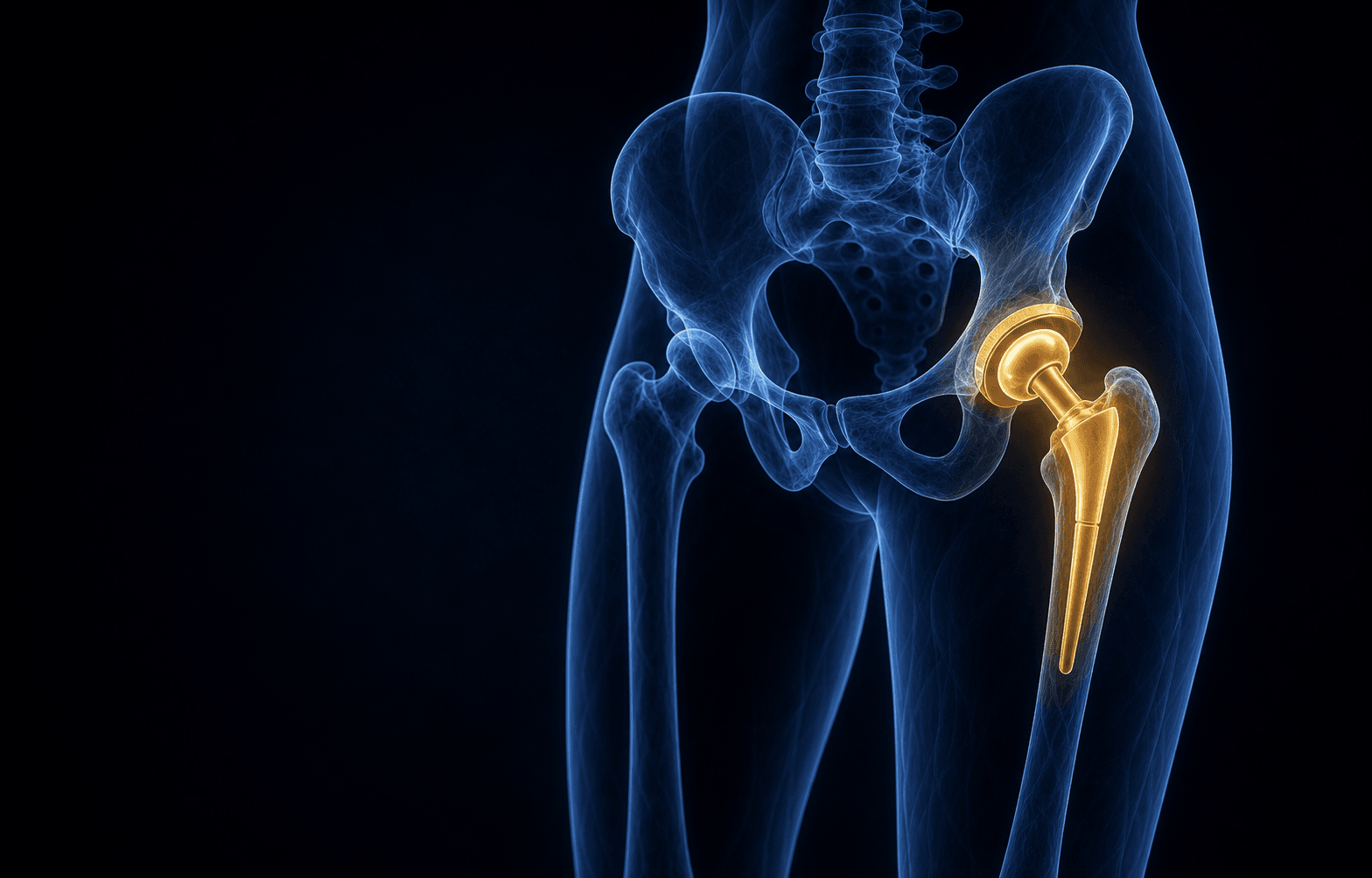
Total Hip Replacement x-ray style procedure visual

Procedure overview

Procedure guidance

IOI care team

Back To Specialties

About The Procedure

What Patients Need To Understand First.

When hip arthritis makes everyday activities difficult, total hip replacement may be considered after a thorough medical evaluation, physical examination, X-rays, and diagnostic imaging.

During replacement, damaged ball and socket surfaces are replaced with components selected for bone quality, anatomy, and recovery goals.

IOI's hip and knee replacement team emphasizes patient education, surgical planning, and recovery support from evaluation through the return to movement.

Clinical Fit

Candidacy Depends On The Details.

  • Hip pain may make it difficult to get in and out of a chair, put on shoes, walk, or rest comfortably.
  • Nonsurgical treatment such as medication and physical therapy is typically considered before surgery.
  • A thorough evaluation is needed before determining whether total hip replacement is appropriate.

Anatomy

The hip is one of the body's largest joints. It is a ball-and-socket joint where cartilage, synovial tissue, and ligaments help the joint move smoothly.

  • The femoral head forms the ball at the top of the thighbone.
  • The socket sits in the pelvic bone.
  • Arthritis can damage cartilage until bones rub together, causing pain and stiffness.

Procedure

Total hip replacement removes damaged portions of the joint and replaces them with prosthetic parts that recreate a smoother joint surface.

  • Damaged cartilage is removed from the socket.
  • A metal or ceramic socket is placed and lined with a plastic cup.
  • A metal or ceramic ball component is attached to a stem inserted into the thighbone.
  • Cementless or cemented fixation may be considered based on bone quality.

What To Expect

A Procedure Path, Not A Guess.

01

Evaluation

The team reviews medical history, symptoms, X-rays, and other diagnostic imaging to understand the extent of hip damage.

02

Planning

Implant choice and surgical approach are planned around anatomy, safety, and the patient's goals.

03

Replacement

Damaged cartilage and bone surfaces are replaced with components intended to relieve pain and restore function.

Recovery Planning

Recovery Has A Sequence.

Recovery timing depends on the procedure, the patient, and the surgeon's guidance.

01

Early Support

Patients may need help around the home at first and should reduce trip hazards.

02

Movement

Walking and physical therapy may be used to strengthen the hip and restore movement and flexibility.

03

Activity

Long-term activity guidance depends on implant choice, recovery, and the patient's goals.

Specialists

Doctors Who Match This Procedure.

View All Doctors
Dr. R. Michael Meneghini headshot

Hip and Knee Replacement Surgeon

Dr. R. Michael Meneghini

View Profile
Dr. Carlos Belmar headshot

Hip and Knee Replacement Surgeon

Dr. Carlos Belmar

View Profile
Dr. T. Kyle Stoops headshot

Hip and Knee Replacement Surgeon

Dr. T. Kyle Stoops

View Profile
Dr. Timothy Williams headshot

Hip and Knee Replacement Surgeon

Dr. Timothy Williams

View Profile
Dr. Brian Murphy headshot

Hip and Knee Replacement Surgeon

Dr. Brian Murphy

View Profile
Dr. Anthony Feher headshot

Hip and Knee Replacement Surgeon

Dr. Anthony Feher

View Profile

Your Best Move Starts Here.

Let our team help you find relief and get back to doing what you love.

Request Appointment