

Home/Specialties/Partial Knee

Procedure Detail

Partial Knee Replacement

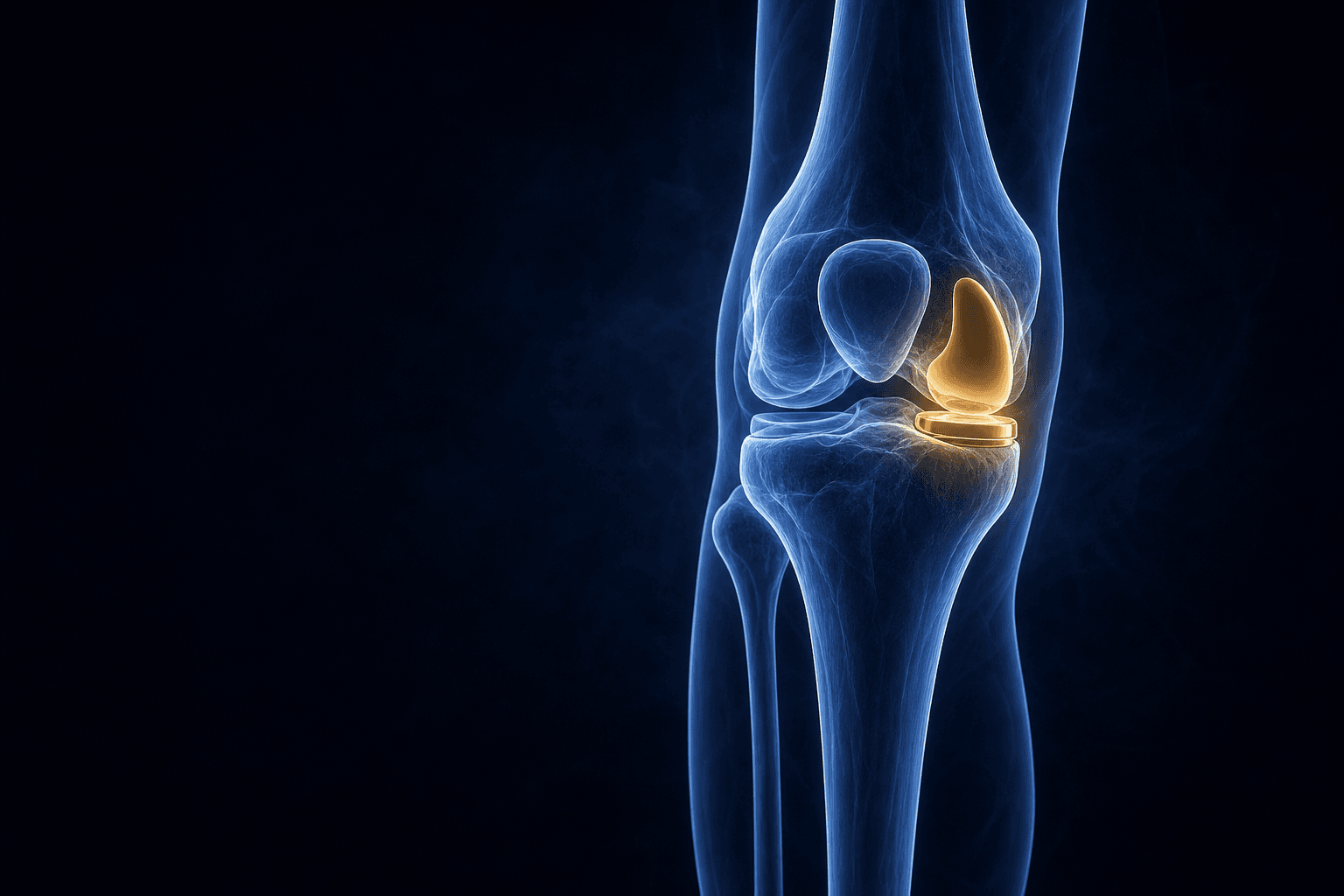
Partial knee replacement may be an option when arthritis damage is limited to one compartment of the knee.

Partial Knee Replacement x-ray style procedure visual

Procedure overview

Procedure guidance

IOI care team

Back To Specialties

About The Procedure

What Patients Need To Understand First.

Partial knee replacement may be a less invasive option when damage is limited to one compartment of the knee.

Healthy bone and cartilage are left intact, while the damaged portion is resurfaced.

Candidate fit depends on the location of arthritis damage, stiffness, ligament condition, and response to nonsurgical treatment.

Clinical Fit

Candidacy Depends On The Details.

  • Advanced arthritis or injury should be limited to one compartment.
  • Inflammatory rheumatoid arthritis may make a patient a poor fit for partial knee replacement.
  • Total knee replacement may be recommended when there is ligament damage or severe stiffness.

Why partial knee replacement

A partial knee replacement replaces only the damaged section of the knee, which may preserve more of the patient's natural joint.

  • Only one compartment is replaced.
  • Healthy bone and cartilage are left intact.
  • Potential benefits include less blood loss, less pain after surgery, and quicker recovery times.

Procedure

Before proceeding, the team confirms the damage is limited to one section of the knee.

  • Damaged cartilage is removed from the affected compartment.
  • The ends of the bone are resurfaced with metal components.
  • A plastic spacer helps the resurfaced compartment glide smoothly.

What To Expect

A Procedure Path, Not A Guess.

01

Confirm compartment

The team explores all compartments of the knee before proceeding.

02

Resurface damage

Only the damaged portion is resurfaced, while healthy bone and cartilage remain.

03

Preserve motion

The goal is to relieve pain while retaining as much natural knee structure as possible.

Recovery Planning

Recovery Has A Sequence.

Recovery timing depends on the procedure, the patient, and the surgeon's guidance.

01

Same-day possibility

Many patients will most likely be able to go home the same day after clearance.

02

Therapy

Patients begin moving the knee soon after surgery to reduce stiffness.

03

Assistive device

Some patients may use a walker, cane, or crutches for the first few days or weeks.

Specialists

Doctors Who Match This Procedure.

View All Doctors
Dr. R. Michael Meneghini headshot

Hip and Knee Replacement Surgeon

Dr. R. Michael Meneghini

View Profile
Dr. Carlos Belmar headshot

Hip and Knee Replacement Surgeon

Dr. Carlos Belmar

View Profile
Dr. T. Kyle Stoops headshot

Hip and Knee Replacement Surgeon

Dr. T. Kyle Stoops

View Profile
Dr. Timothy Williams headshot

Hip and Knee Replacement Surgeon

Dr. Timothy Williams

View Profile
Dr. Brian Murphy headshot

Hip and Knee Replacement Surgeon

Dr. Brian Murphy

View Profile
Dr. Anthony Feher headshot

Hip and Knee Replacement Surgeon

Dr. Anthony Feher

View Profile

Your Best Move Starts Here.

Let our team help you find relief and get back to doing what you love.

Request Appointment