


Home/Specialties/Reverse Shoulder

Procedure Detail

Reverse Total Shoulder Replacement

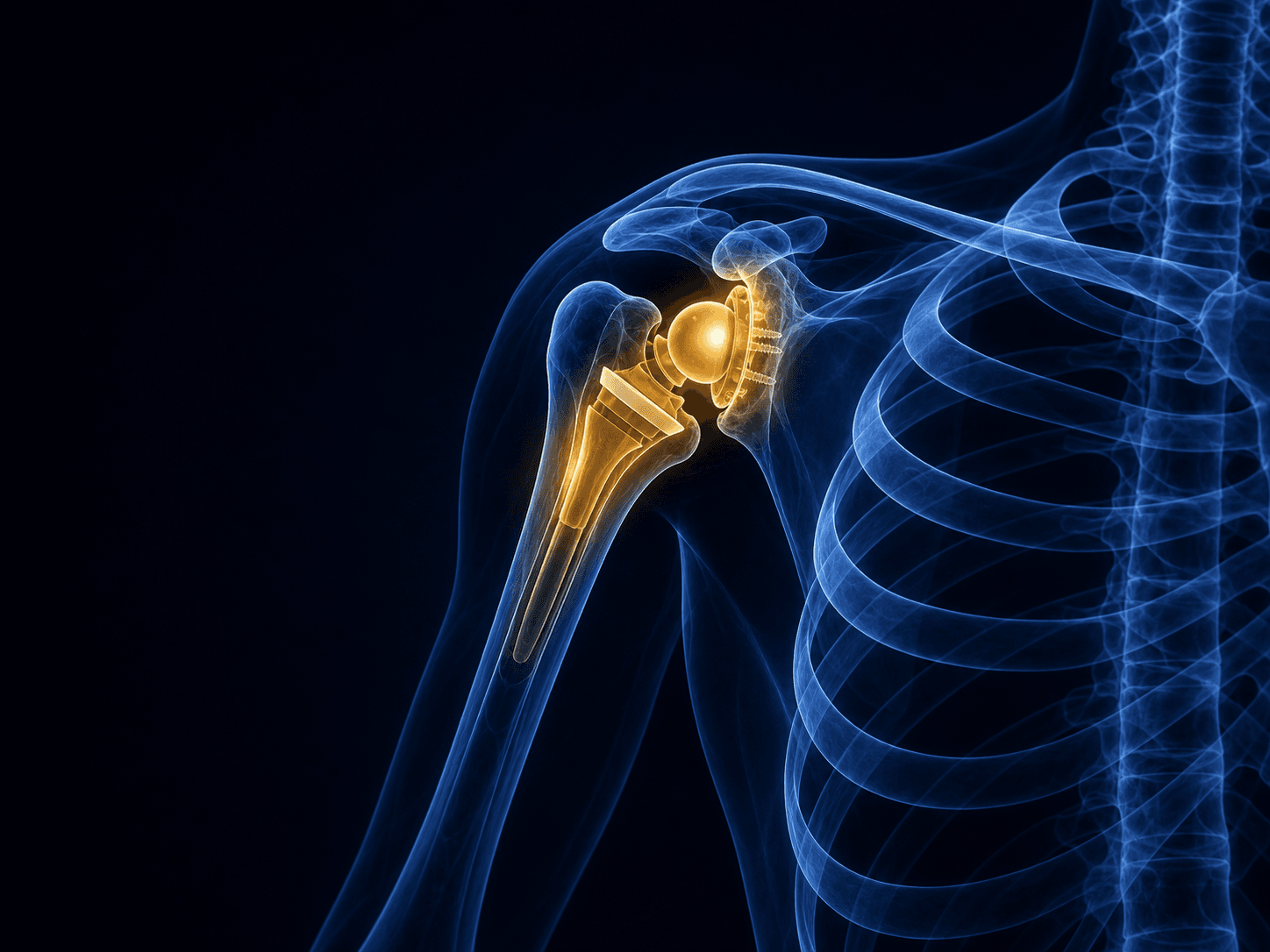
Reverse total shoulder replacement changes the mechanics of the shoulder by reversing the ball and socket relationship.

Reverse Total Shoulder Replacement x-ray style procedure visual

Procedure overview

Procedure guidance

IOI care team

Back To Specialties

About The Procedure

What Patients Need To Understand First.

Reverse total shoulder replacement may be considered for specific shoulder problems, especially when shoulder damage and rotator cuff function affect standard mechanics.

The procedure removes the humeral ball, places a socket on the humerus side, and attaches a new metal ball to the shoulder blade side.

As with other replacement procedures, the final recommendation depends on evaluation, imaging, and the patient's condition.

Clinical Fit

Candidacy Depends On The Details.

  • Candidates may have pain, weakness, or severe shoulder damage that affects daily life.
  • Evaluation includes medical history, exam, X-rays, and diagnostic imaging.
  • Procedure choice depends on the shoulder condition and replacement goals.

Shoulder anatomy

The rotator cuff normally pulls the ball of the shoulder into the socket and helps stabilize the joint.

  • The socket is shallow, which allows a large range of motion.
  • Cartilage helps the joint move smoothly.
  • The rotator cuff and ligaments support shoulder stability.

Reverse procedure

Reverse replacement changes where the ball and socket sit, shifting the mechanics of the shoulder.

  • The ball of the humerus is removed.
  • A stem is placed into the humerus to hold the new socket.
  • Damaged cartilage from the socket is removed.
  • A new metal ball is attached to the shoulder blade.

What To Expect

A Procedure Path, Not A Guess.

01

Determine fit

The surgeon evaluates whether reverse mechanics fit the shoulder condition and patient goals.

02

Reverse components

The new socket is placed where the ball used to be, and the new ball is placed where the socket used to be.

03

Rebuild function

Recovery focuses on safe motion, strength, and daily shoulder function.

Recovery Planning

Recovery Has A Sequence.

Recovery timing depends on the procedure, the patient, and the surgeon's guidance.

01

Early help

Patients should arrange help at home when needed.

02

Exercise

Home exercises and physical therapy support shoulder motion and strength.

03

Follow-up

The surgeon guides activity progression based on procedure details and healing.

Specialists

Doctors Who Match This Procedure.

View All Doctors

Your Best Move Starts Here.

Let our team help you find relief and get back to doing what you love.

Request Appointment