


Home/Specialties/Total Knee

Procedure Detail

Total Knee Replacement

Total knee replacement replaces damaged knee cartilage and bone surfaces with implants designed to recreate a smoother, more functional joint.

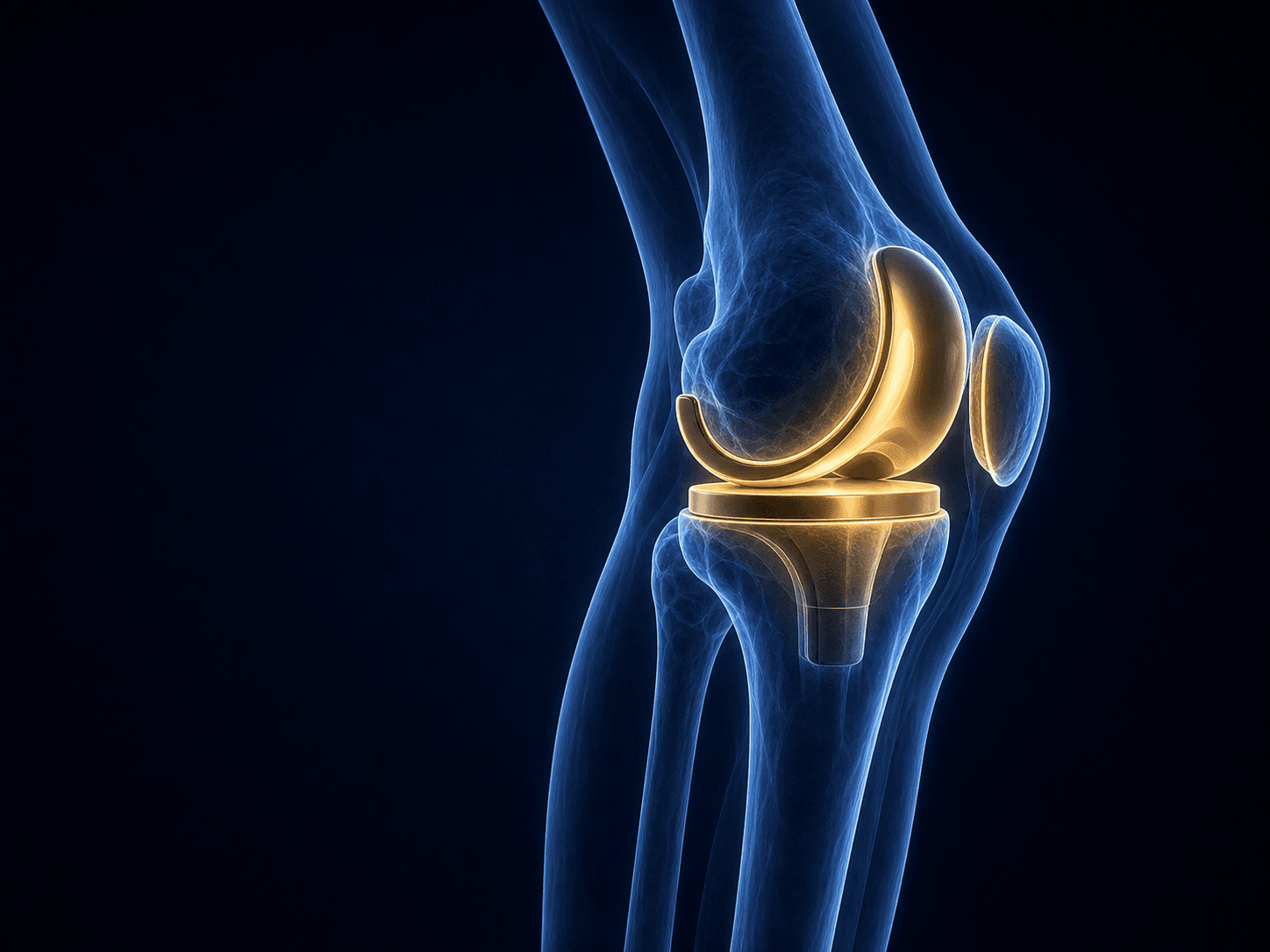
Total Knee Replacement x-ray style procedure visual

Procedure overview

Procedure guidance

IOI care team

Back To Specialties

About The Procedure

What Patients Need To Understand First.

When knee arthritis makes everyday activities difficult, total knee replacement may be considered after nonsurgical options no longer provide enough relief.

During replacement, damaged cartilage and a small amount of bone are removed, then implants are positioned to recreate the joint surface.

Computer assisted navigation may support the knee replacement approach.

Clinical Fit

Candidacy Depends On The Details.

  • Pain may worsen with activity, and some patients may also have pain at rest.
  • In more severe cases, the knee can become deformed.
  • When anti-inflammatory medications, injections, or physical therapy do not provide enough relief, surgery may be considered.

Anatomy

The knee is formed by the thighbone, shinbone, and kneecap. Ligaments, cartilage, and meniscus tissue help provide stability and shock absorption.

  • Cartilage provides a smooth surface for movement.
  • Menisci absorb shock between the thighbone and shinbone.
  • Arthritis or injury can lead to pain, stiffness, and loss of function.

Procedure

Total knee replacement removes damaged cartilage and bone surfaces so metal and plastic components can recreate a smoother knee joint.

  • Damaged cartilage and a small amount of bone are removed.
  • Metal implants are positioned into the bone.
  • The kneecap may be trimmed and resurfaced in some cases.
  • A plastic spacer creates a smooth surface between metal components.

What To Expect

A Procedure Path, Not A Guess.

01

Candidacy

Patients may be candidates when knee pain and stiffness limit walking, stairs, standing, sitting, or rest.

02

Implant Planning

The team considers alignment, implant fixation, and whether cemented or cementless options fit the patient's needs.

03

Replacement

The damaged joint surfaces are replaced with components intended to improve function and reduce pain.

Recovery Planning

Recovery Has A Sequence.

Recovery timing depends on the procedure, the patient, and the surgeon's guidance.

01

Early Motion

Beginning movement as soon as possible can help reduce stiffness.

02

Therapy

Physical therapy and exercise support walking, strength, and gradual weight bearing.

03

Daily Activities

Many patients can return to normal activities within three to six weeks.

Specialists

Doctors Who Match This Procedure.

View All Doctors
Dr. R. Michael Meneghini headshot

Hip and Knee Replacement Surgeon

Dr. R. Michael Meneghini

View Profile
Dr. Carlos Belmar headshot

Hip and Knee Replacement Surgeon

Dr. Carlos Belmar

View Profile
Dr. T. Kyle Stoops headshot

Hip and Knee Replacement Surgeon

Dr. T. Kyle Stoops

View Profile
Dr. Timothy Williams headshot

Hip and Knee Replacement Surgeon

Dr. Timothy Williams

View Profile
Dr. Brian Murphy headshot

Hip and Knee Replacement Surgeon

Dr. Brian Murphy

View Profile
Dr. Anthony Feher headshot

Hip and Knee Replacement Surgeon

Dr. Anthony Feher

View Profile

Your Best Move Starts Here.

Let our team help you find relief and get back to doing what you love.

Request Appointment