

Home/Specialties/Total Shoulder

Procedure Detail

Total Shoulder Replacement

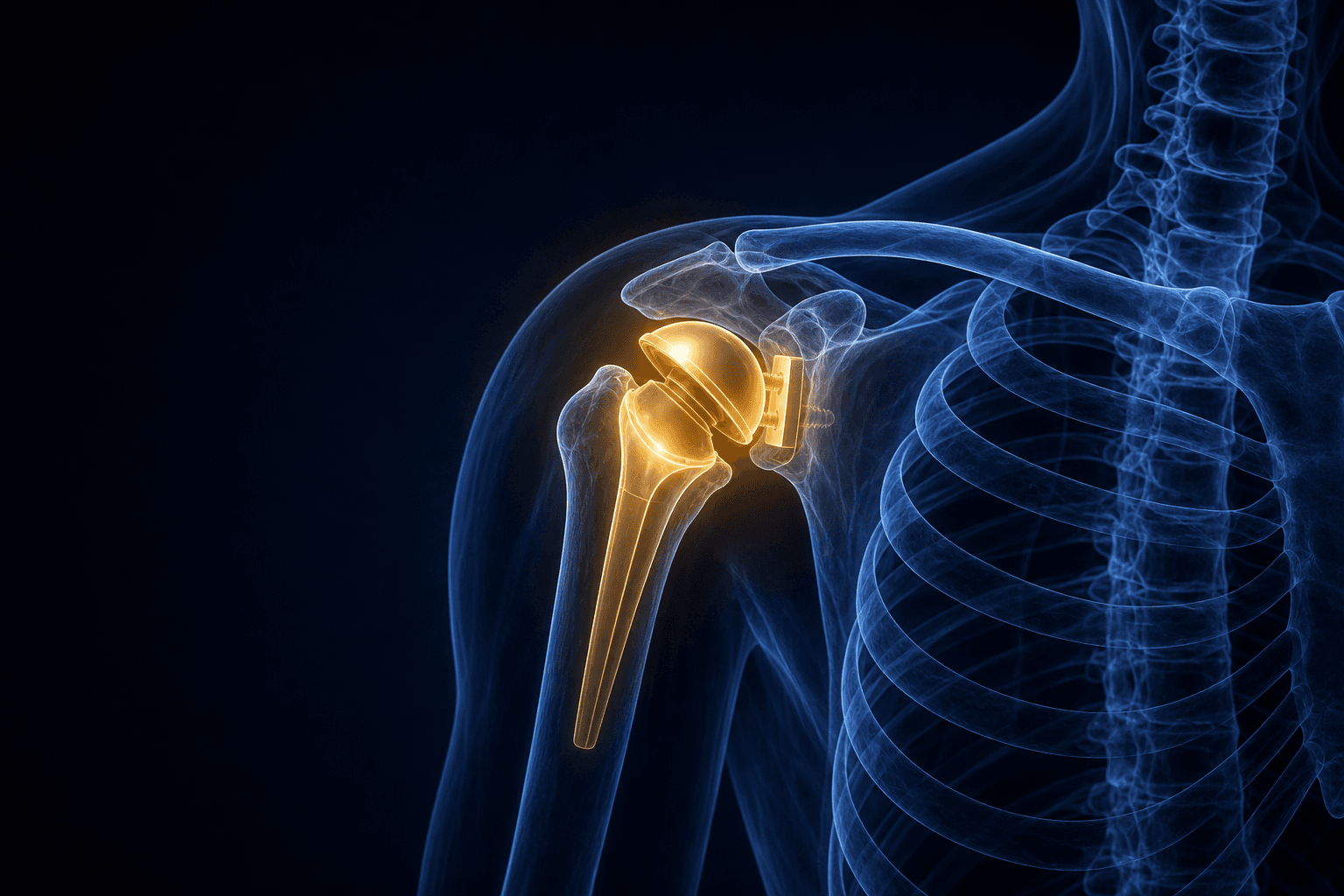
Total shoulder replacement replaces damaged shoulder joint surfaces with a new socket and humeral head component.

Total Shoulder Replacement x-ray style procedure visual

Procedure overview

Procedure guidance

IOI care team

Back To Specialties

About The Procedure

What Patients Need To Understand First.

Total shoulder replacement may be an option when shoulder pain, weakness, or stiffness greatly affects quality of life.

A thorough medical evaluation, exam, X-rays, and diagnostic imaging help determine the extent of joint damage.

The procedure replaces damaged cartilage and joint surfaces with a new socket and metal ball component.

Clinical Fit

Candidacy Depends On The Details.

  • Shoulder joint pain may make simple activities difficult, including lifting a coffee cup or brushing hair.
  • Pain may also interfere with sleep.
  • If medication and physical therapy fail to relieve pain, surgery may be an option.

Shoulder anatomy

The shoulder is a ball-and-socket joint with a shallow socket that allows broad range of motion.

  • The ball is the upper part of the humerus.
  • The socket is part of the shoulder blade.
  • The rotator cuff and ligaments help keep the ball stable in the socket.

Procedure

Total shoulder replacement removes damaged cartilage and recreates the joint with replacement components.

  • Damaged cartilage is removed from the shoulder.
  • A new plastic socket is implanted into the shoulder blade.
  • A new metal ball is placed at the upper humerus.
  • A stem is placed into the humerus to hold the new ball.

What To Expect

A Procedure Path, Not A Guess.

01

Evaluate damage

Imaging and exam findings help determine whether replacement should be considered.

02

Replace surfaces

Damaged shoulder surfaces are replaced with socket and humeral components.

03

Restore function

Recovery planning centers on motion, strength, pain relief, and safety.

Recovery Planning

Recovery Has A Sequence.

Recovery timing depends on the procedure, the patient, and the surgeon's guidance.

01

Home help

Patients may need help with activities at home at first.

02

Exercises

Most patients recover by doing home exercises and then using physical therapy.

03

Therapy

Outpatient physical therapy usually begins around 6 weeks after surgery.

Specialists

Doctors Who Match This Procedure.

View All Doctors

Your Best Move Starts Here.

Let our team help you find relief and get back to doing what you love.

Request Appointment