


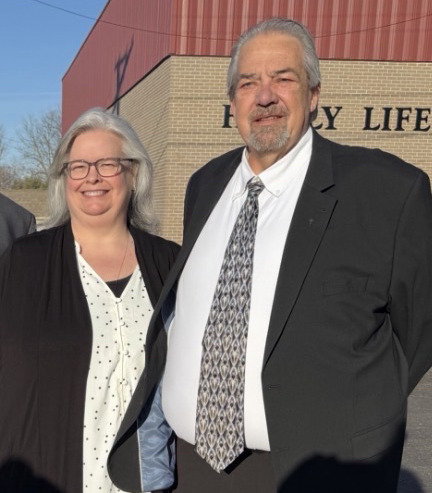
This December, Karen Higginbotham is ready to walk down the aisle at her son's wedding.
No cane. No walker. And, certainly, no wheelchair.
This coming moment would have been impossible a year ago. Arthritis had destroyed her right hip, and her journey through the healthcare system had just about destroyed her hope of ever finding relief.
"For three years, I went to three docs who said they could not do anything," Karen said. “I just kept getting worse and worse to the point where I could barely walk, to the point where I was almost in a wheelchair.”
The doctors at other facilities told her she needed to lose weight before having surgery, something her drastically limited mobility made even more difficult.
From Pain to Hope
One outside physician's demeanor toward her was particularly painful. “He did nothing but make me feel like I was an inch tall,” she said. "I didn’t think anybody could help me.”
Then a podiatrist she knew recommended she call Indiana Orthopedic Institute. In Noblesville, IOI was a bit of a drive from her hometown of Greensburg, IN.
But she gave it one more try, meeting last October with IOI hip and knee surgeon Dr. Neel Patel.
“He just looked at me and he goes, 'I can help you.'"
Karen sobbed.
And then, last December, she had surgery.
She prepared for the day by taking extra protein and keeping her diabetes under control. She went through IOI's in-house perioperative health evaluation.
Indiana Orthopedic Institute regularly performs joint replacements on patients other hospitals turned away because of weight.
Body Composition Key
"People focus way too much on obesity and numbers," Dr. Patel said. "They don't focus too much on body composition. The reason we use those numbers, weight and BMI, is because they're easy for us to measure, not because those are the right things to measure.
"It's really important to recognize body composition. Some people are considered obese, but they also have a decent amount of muscle, and they know how to take care of themselves. They know how to regulate their diet. They don't have too many health issues. "
For example, having weight issues combined with other factors like poorly controlled diabetes or smoking makes things more complicated.
Dr. Patel also worries when patients become immobile, even wheelchair bound, because they are unable to get a joint replacement.
"When you become wheelchair-bound, your muscle mass just drops tremendously," he said. "My goal is just to get them moving, get them going, get those muscles activated. "
Dr. Patel added: "The person who does the best clinically is the person who says, 'I understand the problem. I tried everything and I’m willing to put in the work afterwards.' Karen understood this, and that’s why her surgery was a success. "
After surgery, even with incision pain, Karen noticed right away that her hip felt different. "I was waiting for that pain to start shooting, and I had nothing... I didn’t have that crazy pain.”
In the months since surgery, Karen has lost about 60 pounds.
Karen's husband, Tony, also appreciated Dr. Patel and the staff support of patients and their families. "IOI treats their patients and families, not only physically but mentally and emotionally," he said.
"I am a whole different person because I can move. "
And those movements soon will include walking down the aisle.
Are you in pain and losing mobility? IOI wants to talk with you.
Healthy hips are key to staying active and pain-free. IOI provides advanced hip care in Noblesville, Terre Haute, and Fort Wayne for chronic pain, arthritis, injuries, and replacement planning.
To schedule today, call 317-620-0232 or visit indianaortho.com.